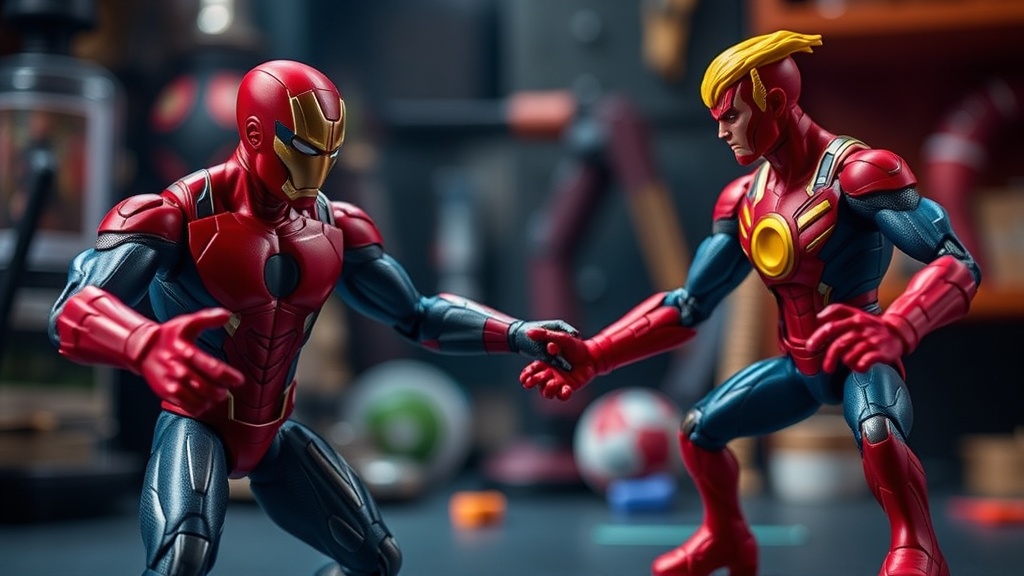
Fixing Loose Joints and Loose Limbs on Your Marvel Figures

Have you ever unboxed a brand-new Marvel Legends figure only to find the elbow or knee joint is so loose it can't even hold a pose?
It’s a frustrating experience. You spend your hard-earned money on a highly anticipated figure—maybe a premium version from the Hasbro lineup—and the limb just flops. This guide covers the specific methods for tightening those loose joints using household items and specialized products so your collection stays upright and looks professional on your shelf.
Loose joints happen for a few reasons. Sometimes it's a manufacturing defect where the plastic tension is too low. Other times, it's simple wear and tear from posing. Regardless of the cause, you don't have to live with a drooping Spider-Man or a sagging Thor.
How do I fix loose joints on action figures?
You can fix loose joints by using a small amount of clear nail polish, specialized joint tightening fluid, or a tiny bit of plastic shavings to increase friction within the joint.
The goal is to add "bulk" to the socket or the ball joint itself. When the space between the ball and the socket is too wide, the limb loses its grip. By adding a microscopic layer of material, you create enough resistance to hold a pose without making the joint so tight that it snaps.
The Nail Polish Method
This is the most common "quick fix" for collectors. It’s cheap and easy, but you have to be careful. If you use too much, you'll end up with a permanent, sticky mess.
- Remove the limb: Carefully pop the limb off the body. If it's a ball joint, be gentle so you don't snap the peg.
- Apply the polish: Use a toothpick or a very fine brush to apply a thin layer of clear nail polish to the ball or the inside of the socket. Do not pour it directly from the bottle.
- Let it dry: This is the part most people skip. You must let the polish dry completely (at least 2-4 hours) before reattaching the limb. If you don't, the polish will smear and create a mess.
- Reassemble: Once dry, pop the limb back on.
The catch? If you apply too much, the joint will become "stiff-brittle" and might break during your next pose. Use a toothpick to control the amount. A tiny dot is often better than a large smear.
The Plastic Shavings Method (The "Pro" Way)
If you're worried about the chemical reaction of nail polish on certain plastics, try the plastic shaving method. This involves taking a tiny piece of thin plastic—like a piece of a discarded way too-thin plastic bag or a tiny sliver from a broken figure—and placing it in the joint.
This creates physical friction. It's a bit more "old school," but it works wonders for those heavy-duty Marvel Legends figures that need to hold heavy accessories or weapons.
What are the best products for tightening figure joints?
The best products include clear nail polish for quick fixes, specialized joint tightening fluids for precision, and a tiny amount of heat for softening plastic. Each tool serves a different level of "surgery" on your figure.
Depending on how much damage you're dealing with, you might need a different approach. Below is a breakdown of common materials used by collectors to restore figure stability.
| Method/Product | Difficulty | Best For | Risk Level |
|---|---|---|---|
| Clear Nail Polish | Low | Ball joints and simple sockets | Medium (Can be messy) |
| Joint Tightening Fluid | Medium | Precision adjustments | Low |
| Plastic Shavings | High | Deep sockets and heavy limbs | High (Hard to undo) |
| Heat (Hairdryer) | Low | Softening tight joints | Medium (Can melt plastic) |
If you're dealing with a figure that has very delicate parts, you might want to check out my post on protecting figure joints with proper temperature control. Heat is a double-edged sword. While a little warmth can help a joint move more freely, excessive heat will warp the plastic permanently.
Using Heat to Fix "Stiff" Joints
Sometimes, the problem isn't that the joint is too loose, but that it's too tight and feels like it's going to break. This is common with newer figures that have very tight tolerances. In these cases, you don't want to add material; you want to soften it.
Use a hairdryer on a low setting. Hold the figure at a distance—at least 6-10 inches away. Warm the joint for about 15-20 seconds. This softens the plastic slightly, allowing the joint to move without the constant fear of a "snap." Once it cools, the plastic will set in its new, slightly more flexible state.
Can you fix a broken limb entirely?
You can fix a broken limb by using a two-part epoxy or a specialized plastic cement, but this is a permanent structural repair rather than a simple tightening fix.
If a peg has actually snapped off, nail polish won't help. You'll need a structural adhesive. I recommend a high-quality epoxy. Unlike superglue, which can be brittle and snap under pressure, epoxy is more resilient. However, be warned: once you glue a limb, it's no longer a "poseable" joint. It's a static piece.
For collectors who want to keep their figures in "mint" condition, I'd suggest looking for replacement parts on secondary markets before attempting a permanent glue-based repair. If you're looking for high-end figures to add to your collection, you might want to check out my list of top 5 must-have Marvel Legends figures. These are often higher quality and might be worth the investment of finding a replacement part rather than a messy glue job.
Common Mistakes to Avoid
- Using Superglue (Cyanoacrylate): Superglue is very thin and can seep into the joint. It also dries extremely hard. If it gets inside the socket, the joint will become a single, unmoving piece of plastic. It can also "fog" the plastic, leaving a white residue that ruins the look of the figure.
- Overheating: Never use a heat gun. A hair dryer is much safer. A heat gun is too intense and will melt your figure into a puddle of molten plastic in seconds.
- Applying Too Much Material: If you're using the nail polish method, less is always more. It's much easier to add a second layer than it is to remove a third one.
A lot of collectors get impatient. They want the figure to look perfect right now. But if you're rushing the drying process or the heating process, you're asking for trouble. Take your time. A little patience goes a long way in preserving your collection.
If you're worried about how these fixes might affect the long-term value of your figures, you might want to read my guide on buying Marvel action figures that actually hold value. Generally, any "home surgery" or modification can slightly decrease the "collector grade" status of a figure, though for a display piece, it's usually worth it.
Keep your tools organized and your movements steady. Whether you're working on a $10 figure or a $100 piece, the principle remains the same: precision is your best friend.
Steps
- 1
Identify the Loose Joint Type
- 2
Apply a Tiny Amount of Clear Polish or Specialized Tightener
- 3
Wait for Proper Drying Time
- 4
Test the Range of Motion