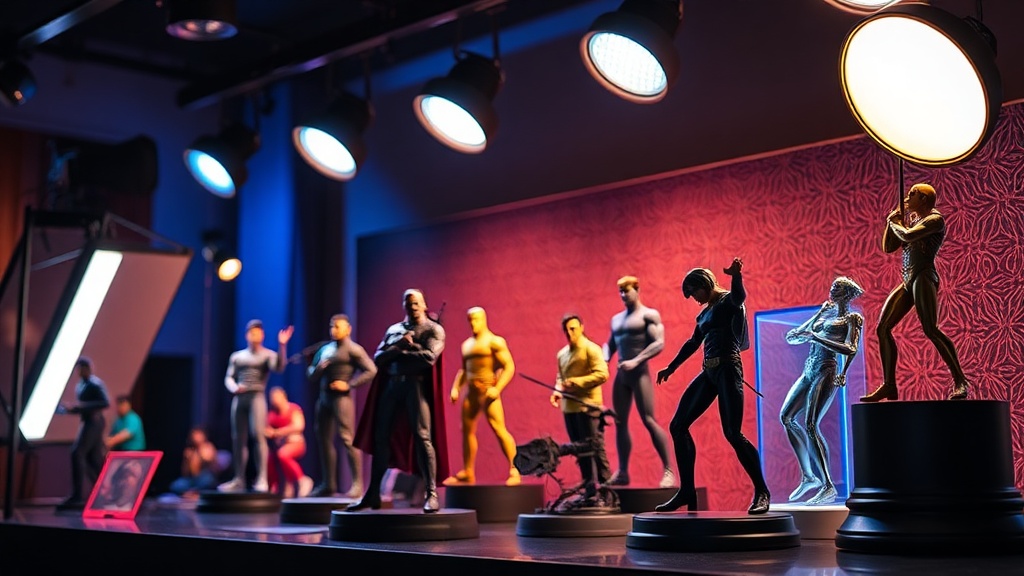
Selecting the Best Lighting for Your Figure Displays

Why Most Collectors Get Lighting Wrong
Many collectors assume that more light equals better visibility, but that's a mistake that often leads to damaged collections. Throwing a bright LED strip at a shelf might make things visible, but if you aren't careful, you're actually inviting heat buildup and UV degradation. This isn't just about seeing your figures; it's about protecting the paint applications and plastic integrity of your most prized possessions. We're looking at how to balance visibility with preservation so your display looks professional without sacrificing the longevity of the figures themselves.
A common misconception is that any light source works as long as it's bright. In reality, the wrong light can actually cause paint flaking or even yellowing of the plastic over time. You need to think about light-to-heat ratios and the spectrum of light being used. If you're using standard household bulbs, you might be doing more harm than good. We need to look at specific types of light that provide clarity without the destructive side effects.
Should You Use LED or Fluorescent Bulbs?
If you're choosing between LED and fluorescent, LED is almost always the winner for collectors. LEDs are much more efficient and, more importantly, they produce significantly less heat. Heat is the enemy of high-end articulated figures. High temperatures can cause the plastic to soften or even warp, which is a nightmare for figure stability. Fluorescent lights, while common, often contain small amounts of mercury and can emit more UV radiation if they aren't high-quality.
When you're browsing for lighting solutions, look for "cool white" or "daylight" settings. These options provide a crisp look that highlights the sculpt of your figures without making them look washed out. According to lighting experts at Energy.gov, LED technology is far more stable and predictable than older methods. For a collector, this stability means your display stays consistent and your figures don't suffer from unexpected thermal stress. If you're setting up a glass cabinet, check the clearance between your light source and the top shelf; you don't want a bulb sitting inches away from a plastic figure's head.
What Is the Best Color Temperature for Figures?
Color temperature is measured in Kelvin (K), and it determines the "mood" of your display. If you want your Marvel Legends or premium statues to look exactly as they did in the box, you'll want to aim for a neutral light. A temperature around 5000K to 6500K mimics natural daylight. This makes colors pop and provides a realistic sense of depth to the shadows in the sculpt. However, if you want a more cinematic, dramatic look for a specific scene, you might drop down to 3000K (warm light), but be careful—too much warmth can make your reds look orange and your blues look muddy.
One thing to watch out for is the CRI, or Color Rendering Index. This is a number between 0 and 100 that tells you how accurately a light source reveals colors. For a serious collector, you want a CRI of 90 or higher. A low CRI light source might make a vibrant red Iron Man figure look dull or brownish. It's an overlooked detail, but it makes a massive difference in how your collection looks when viewed from across the room. You can find more technical details on light quality through resources like Energy Savings resources regarding efficiency and light output.
How Do I Avoid UV Damage in My Display Case?
UV damage is a silent killer for collectors. Even if you don't see it happening immediately, prolonged exposure to UV rays can break down the molecular bonds in plastics and pigments. This results in that dreaded "yellowing" on white plastic or the fading of bright colors. If your display is near a window, you're already at risk. Even if the light isn't direct sunlight, ambient UV can still creep in.
To combat this, consider these three approaches:
- UV-Resistant Acrylic: If you're buying a custom display case, ask if the acrylic is UV-stabilized. It acts as a shield for your figures.
- UV Film: You can apply a clear UV-protective film to your windows to reduce the amount of light entering the room.
- Smart Lighting: Use smart bulbs that allow you to schedule when the lights are on. You don't need your display lights running 24/7.
It's also worth noting that shadows are your friend. A well-lit display isn't just a bright box; it's a way to create depth. By using directional lighting—rather than just a single overhead source—you can create a sense of drama. Think about using small spotlights to highlight a specific character's silhouette. This adds a layer of professionalism to your setup that a generic light strip simply can't match.
| Light Type | Heat Output | UV Risk | Best Use Case |
|---|---|---|---|
| LED Strip | Very Low | Low | Shelf edges and general illumination |
| Spotlight (LED) | Low | Low | Highlighting specific figures or scenes |
| Fluorescent | Medium | Moderate | Large, general room lighting (avoid for close-up) |
| Halogen | High | High | Not recommended for toy collections |
The goal is to create a controlled environment. If you're investing in high-end figures, the least you can do is provide them with a display that respects their value. Don't just throw up some cheap lights and hope for the best. Take the time to measure the light, check the Kelvin scale, and ensure your heat levels are under control. Your collection—and your wallet—will thank you later.