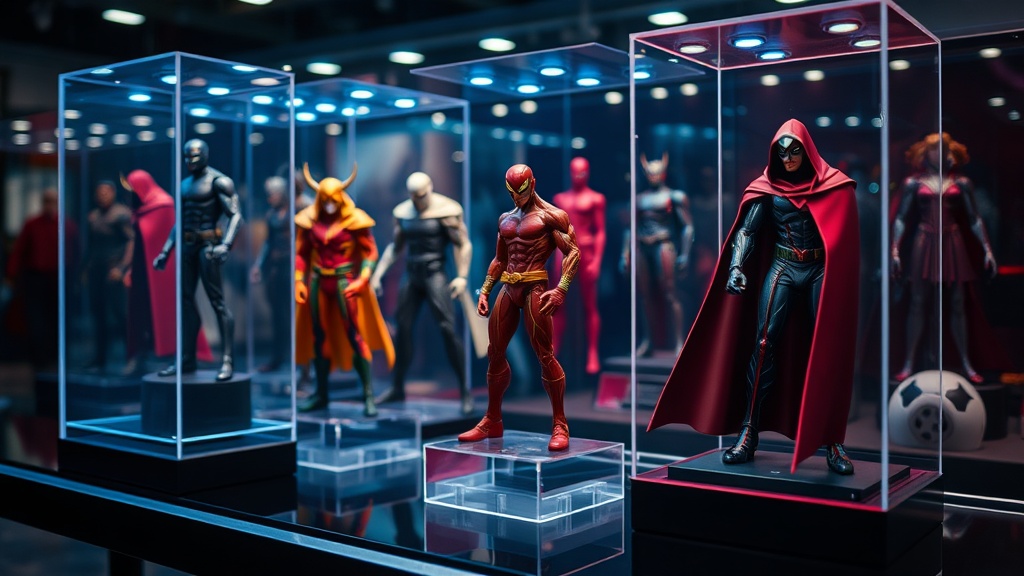
Premium Figure Display Cases and Acrylic Stands

Tiered Acrylic Riser Stands
Dustproof Acrylic Display Boxes
Rotating Display Turntables
A collector spends months hunting down a specific Hot Toys sixth-scale figure, only to have it sit in a cardboard box in the closet because they couldn't find a way to show it off. Or worse, they display it on an open shelf where a single spilled drink or a layer of thick dust ruins the paint job. This post looks at the different types of premium display cases and acrylic stands available to keep your collection looking sharp and protected.
Displaying high-end figures isn't just about putting things on a shelf. It's about creating a museum-quality presentation while protecting your investment from the elements. Whether you're dealing with a single centerpiece or a massive collection of Marvel Legends, your choice of housing matters.
What is the Difference Between Acrylic and Glass Display Cases?
Acrylic cases are generally lighter and more shatter-resistant than glass, making them the preferred choice for many hobbyists. While glass offers a high-end, crystal-clear look, it's much heavier and can break if a shelf collapses. Acrylic (often made from PMMA or polymethyl methacrylate) is much more forgiving during a move or an accidental bump.
If you're looking at high-end displays, you'll notice a few distinct differences in how these materials behave over time. Glass is much harder to scratch, but acrylic is easier to work with if you're building custom setups. Most collectors prefer acrylic because it's easier to clean and doesn't feel quite as "fragile" when you're reaching in to pose a figure.
Here is a quick breakdown of how these materials stack up:
| Feature | Acrylic (Plastic) | Glass |
|---|---|---|
| Durability | High (Shatter-resistant) | Low (Fragile) |
| Clarity | Excellent (High transparency) | Superior (Minimal distortion) |
| Weight | Lightweight | Heavy |
| Scratch Resistance | Low (Scratches easily) | High (Very durable) |
One thing to watch out for is the "yellowing" effect. Cheap acrylic can turn yellow over time when exposed to UV light. If you're displaying figures near a window, you'll want to ensure you're using high-quality, UV-stabilized materials. You can learn more about long-term preservation in our post on keeping your premium figures safe from dust and sunlight.
How Much Do High-End Display Cases Cost?
The cost of premium display cases typically ranges from $30 for small acrylic stands to over $500 for large, professional-grade LED-integrated cabinets. You'll find that the price scales directly with the volume of the space and the quality of the materials used. A single figure stand from a brand like Hasbro or Hot Toys will be much cheaper than a full-sized cabinet from a company like Hayward or IKEA.
Don't assume that a more expensive case is always better. Sometimes, a simple $15 acrylic riser is all you need to make a single figure pop. However, if you're building a serious collection, you'll eventually want to invest in larger, enclosed units. These provide much better protection against the environment.
When budgeting, consider these three tiers:
- Tier 1: Basic Stands ($5 - $25). These are small, single-figure or small-group stands. Think of the clear plastic pegs used for Marvel Legends or smaller action figures.
- Tier 2: Mid-Range Acrylic Boxes ($40 - $120). These are often individual "museum" boxes for a single high-end figure. They usually have a clear lid and a solid base.
- Tier 3: Professional Cabinets ($200 - $1,000+). These are large-scale solutions, often with built-in lighting and specialized ventilation.
It's worth noting that the "hidden" cost of a display is the maintenance. Even in a closed case, you'll still need to periodically check for dust buildup or material degradation. If you're using a lot of LED lights in your cases, make sure they aren't generating too much heat—heat is the enemy of plastic and paint.
Which Acrylic Stands are Best for Action Figures?
The best acrylic stands for action figures are those that offer adjustable stability and minimal visibility. You want the stand to support the figure without drawing eyes away from the actual sculpt. Brands like Good Smile Company or Tamashii Nations often produce specific stands that work perfectly with their lines of figures.
If you are a collector of 1/6 scale figures, you'll likely need a more substantial stand. A standard figure stand might not have the weight or the strength to hold a heavy-duty figure in a dynamic pose. You'll want to look for "museum-style" bases that offer a wide footprint. This prevents the figure from toppling over if the shelf is bumped.
When choosing a stand, look for these features:
- Clear Pegs: You want the plastic to be as invisible as possible.
- Adjustable Arms: This allows for more dynamic posing (like a mid-air punch or a flying pose).
- Non-Slip Base: This ensures the figure doesn't slide around on the stand itself.
- UV Protection: As mentioned, high-quality acrylic helps block harmful rays.
For those using specialized displays, you might also want to look into the properties of acrylic to ensure you're buying a product that won't degrade your figure's paint over time. Some cheap plastics can actually react with certain types of paint or coatings if they are in direct contact for years.
One thing I've noticed with my own collection is that the height of the stand is just as important as the width. If you have a shelf with limited vertical space, a tall stand might prevent you from closing the case or might hit the top of the cabinet. Always measure your "clearance" before buying a stand.
If you're already setting up your displays, you'll probably want to think about how to light them up. Proper lighting can make a $20 figure look like a $200 figure. Check out our guide on choosing the best lighting for your figure shelves to get the most out of your new display setup.
A lot of collectors make the mistake of buying a huge case first and the stands later. I'd suggest doing the opposite. Get your stands and your figure-specific accessories sorted, then build the "housing" around them. This ensures that every inch of your display space is utilized effectively.
When you're looking at brands, don't be afraid to look at "display-only" companies. Sometimes, the best way to display a figure isn't a "toy" stand, but a professional-grade display accessory used in retail. These are often more durable and look much cleaner in a home office or a dedicated hobby room.
If you're building a massive wall of figures, consider the weight. A full shelf of glass-encased figures is incredibly heavy. Make sure your shelving units are rated for the load. I've seen people lose entire collections because they underestimated the weight of a glass-fronted cabinet filled with heavy statues or premium figures.
The goal is to create a space where your collection feels like a curated exhibition rather than just a pile of stuff on a shelf. It takes a bit of planning and a little bit of investment, but the difference in how your collection looks (and how much you enjoy looking at it) is massive.